Italy Shutdown: Nationwide Strikes and Protests Erupt Over Gaza Crisis
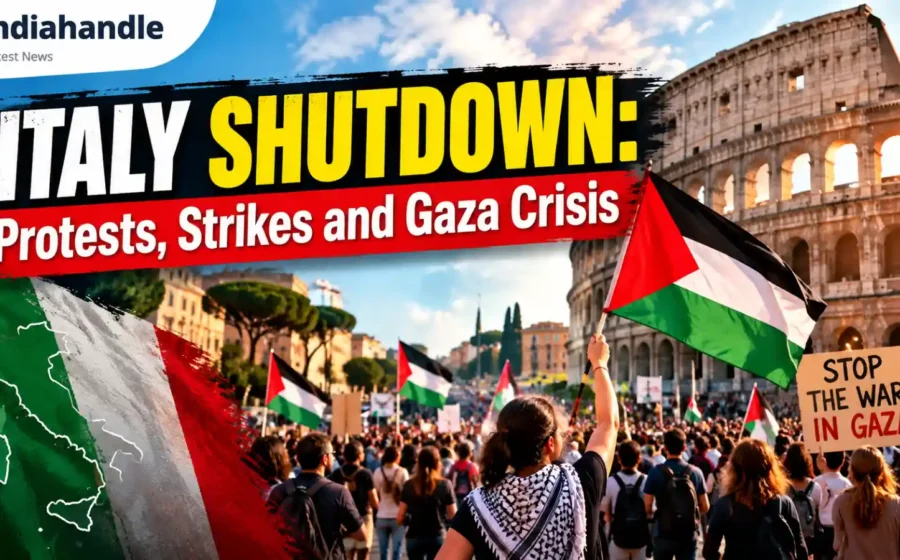
Italy witnessed widespread strikes and protests in September and October 2025 as thousands of workers, students and ordinary citizens took to the streets in support of Palestinians in Gaza. Trade unions organised nationwide action, while dockworkers blocked access to major ports and transport services faced disruption.
The protests reflected growing public anger over the war in Gaza and the Italian government’s response to the humanitarian crisis. Demonstrations took place in several major cities, including Rome, Milan, Genoa and Bologna. The movement also raised questions about Italy’s foreign policy and the role of European governments in the conflict.
Why Did the Italy Shutdown Happen?
The Italy shutdown was driven by nationwide strikes organised by trade unions in solidarity with Palestinians. Protesters called for stronger action to address the humanitarian crisis in Gaza and demanded an end to Italy’s involvement in any arms transfers linked to the conflict.
On September 22, 2025, workers across the country joined a general strike called by grassroots unions. The action affected several sectors, including railways, local public transport, schools, public services and ports. Demonstrators also blocked roads and organised marches in major cities.
The protests were organised under the slogan “Let’s Block Everything”. Participants believed that strikes and disruptions could put pressure on political leaders to take a stronger position on Gaza.
However, the action did not mean that every business, school or transport service across Italy had stopped operating. The level of disruption varied by location and sector.
Major Italian Ports Face Disruption
Italy’s ports became a major focus of the protests, particularly because of their role in international trade and shipping.
In Genoa, dockworkers blocked access roads and joined demonstrations near the port. Workers in Livorno also restricted access to port facilities. Protesters said they wanted to prevent Italian ports from being used to move weapons or other supplies connected to the war in Gaza.
The demonstrations affected transport and commercial activity in several areas. At the port of Marghera near Venice, police used water cannons against demonstrators, according to reports from Italian news agency ANSA.
The action highlighted how workers in key industries can use strikes to draw attention to political and humanitarian issues. Ports are important to Italy’s economy, so even temporary disruption can affect the movement of goods.
Protests Spread Across Rome, Milan and Other Cities
The demonstrations extended beyond the ports, with large crowds gathering in cities across Italy.
In Rome, protesters gathered near Termini railway station and marched with Palestinian flags and trade union banners. Participants called for greater government action and expressed opposition to the continuing war in Gaza.
Milan also saw major demonstrations. Tensions rose near the city’s central railway station, where clashes broke out between some protesters and police. Police used tear gas as authorities attempted to control the situation.
Other protests took place in Bologna, Naples, Palermo and several additional cities. Some demonstrations remained peaceful, while others led to confrontations with police and disruption to road traffic.
The events showed that opposition to the war in Gaza had become a significant issue in Italy’s public debate. Trade unions, students and other groups joined the demonstrations for different reasons, but many shared demands for stronger action from the government.
Italian Government Responds to the Strikes
The protests also led to a political dispute between the government and the organisers.
Prime Minister Giorgia Meloni criticised acts of violence and property damage linked to the demonstrations. She argued that such actions would not improve the situation for people in Gaza.
Transport Minister Matteo Salvini also criticised the strike movement, describing it as a political mobilisation by left-wing unions. The government’s response reflected a wider disagreement over how Italy should respond to the conflict and how far protest action should go.
Union leaders, meanwhile, defended the strikes as a way for workers to express opposition to the war and demand political accountability.
The disagreement highlighted the challenge facing the government as public pressure over the Gaza crisis continued to grow.
Gaza Aid Flotilla Leads to Further Protests in October
The protests continued into October 2025, following the interception of vessels linked to the Global Sumud Flotilla. The flotilla aimed to deliver humanitarian aid to Gaza and challenge Israel’s naval blockade.
On October 3, tens of thousands of people took part in another nationwide general strike organised by Italian unions. Demonstrations took place in more than 100 cities, according to Reuters reporting.
Protesters demanded action over the interception of the aid mission and called for greater support for Palestinians. The strike caused significant disruption to rail services, although some urban transport systems continued to operate.
The October demonstrations showed that public anger had not ended with the September strike. The flotilla incident became another focus for people who believed that the Italian government should take a stronger position on the humanitarian crisis.
How Did the Italy Shutdown Affect Daily Life?
The strikes affected several parts of daily life, although the impact differed across the country.
Transport: Railways and local public transport faced disruption in some areas. Travellers could experience delays or changes to their journeys.
Schools and public services: Some schools and public services were affected by industrial action, depending on the location and the workers involved.
Ports and trade: Demonstrators restricted access to important ports, including Genoa and Livorno. These actions created obstacles for shipping and commercial activity.
Road traffic: Marches and roadblocks caused delays in several cities. Clashes between some demonstrators and police added to the disruption in certain locations.
The shutdown demonstrated how coordinated industrial action can affect essential services. However, the extent of the disruption should not be confused with a complete nationwide closure.
What the Italy Shutdown Means for European Politics
The protests also raised broader questions about European policy toward the war in Gaza.
Italy is an important European economy with major ports and strong links to international trade. When workers in these sectors take political action, their demands can attract attention beyond the country’s borders.
The strikes showed that foreign policy decisions can become a domestic issue, especially when citizens believe that their government should do more to address a humanitarian emergency.
They also highlighted the influence of trade unions in public debate. By organising strikes and demonstrations, unions provided workers with a way to express their views outside the usual political process.
At the same time, the protests exposed divisions within Italy over the best response to the conflict. The government and demonstrators disagreed over the purpose and impact of the strikes, as well as the country’s responsibilities.
What Happens Next?
The September and October 2025 strikes marked an important period of public mobilisation in Italy over the Gaza crisis. They brought together workers, students and citizens and disrupted parts of the country’s transport network, public services and port operations.
The protests also placed renewed attention on Italy’s relationship with Israel, its approach to arms transfers and its response to humanitarian concerns in Gaza.
Any further nationwide strike or shutdown should be confirmed through current announcements from trade unions and official transport authorities. The 2025 protests do not, by themselves, indicate that Italy is shut down today.
The wider message from the demonstrations was clear: the war in Gaza had become a major issue in Italian public life, and protesters wanted political leaders to respond to their demands.
Read More Also – Understanding Global Economic Trends: Key Insights for 2026



[…] News Socialist Countries: Which Nations Follow Socialism Today?Italy Shutdown: Nationwide Strikes and Protests Erupt Over Gaza CrisisNavratri First Day 2026: Date, Maa Shailputri Puja Vidhi, Shubh Muhurat and SignificanceFairfax […]