India Cricket Team Latest News: Match Results, Scorecards, Player Performances and Team Analysis
Indian cricket continues to attract enormous attention from fans who follow international matches, major tournaments, player performances and team selection decisions. Every match brings new questions: How did India perform with the bat? Did the bowlers control the opposition’s scoring? Which players made the biggest contribution? And what does the result mean for India’s next assignment?
For readers of India Handle, the most important principle in publishing cricket news is accuracy. A scorecard must match the official match record, a result must be confirmed, and player analysis should be based on actual performances rather than speculation.
This article provides a news-style overview of the key areas to follow in Indian cricket, along with guidance on interpreting scorecards, assessing players and publishing verified match reports. Specific October 2026 match results and scorecards should be added only after they have been checked against official records. I will not invent a score or describe an unverified match as completed.
1. Latest India Cricket Team News: India Beat West Indies in the Third T20I
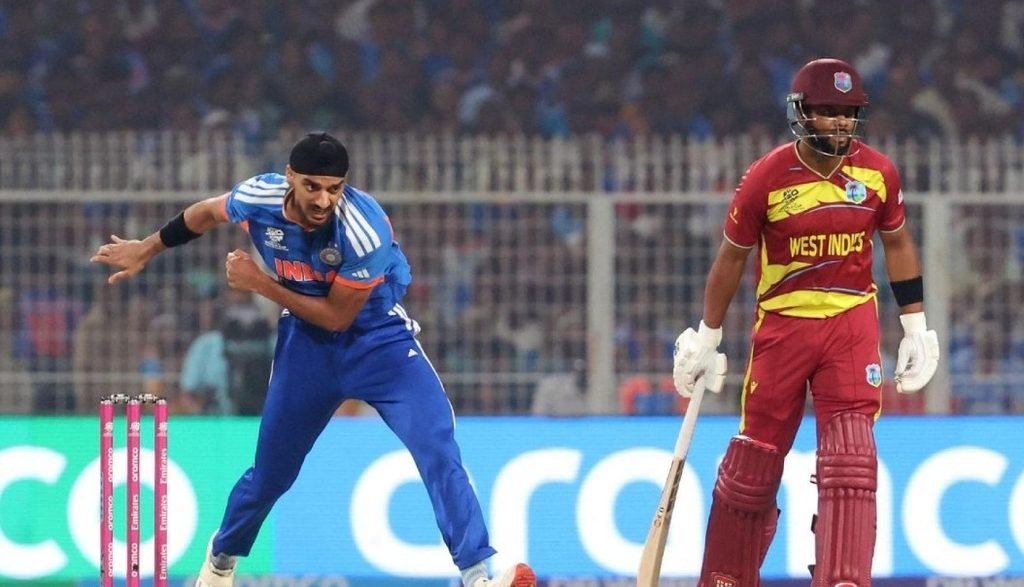
India’s men’s team has been involved in a competitive series against the West Indies, with the opening three T20 internationals producing contrasting results. According to the ICC’s India team results page, India won the third T20I on October 11, 2026, by 14 runs. The result followed a West Indies victory in the second match, making the series an important test of India’s ability to respond under pressure.
Confirmed scorecard: India vs West Indies, 3rd T20I
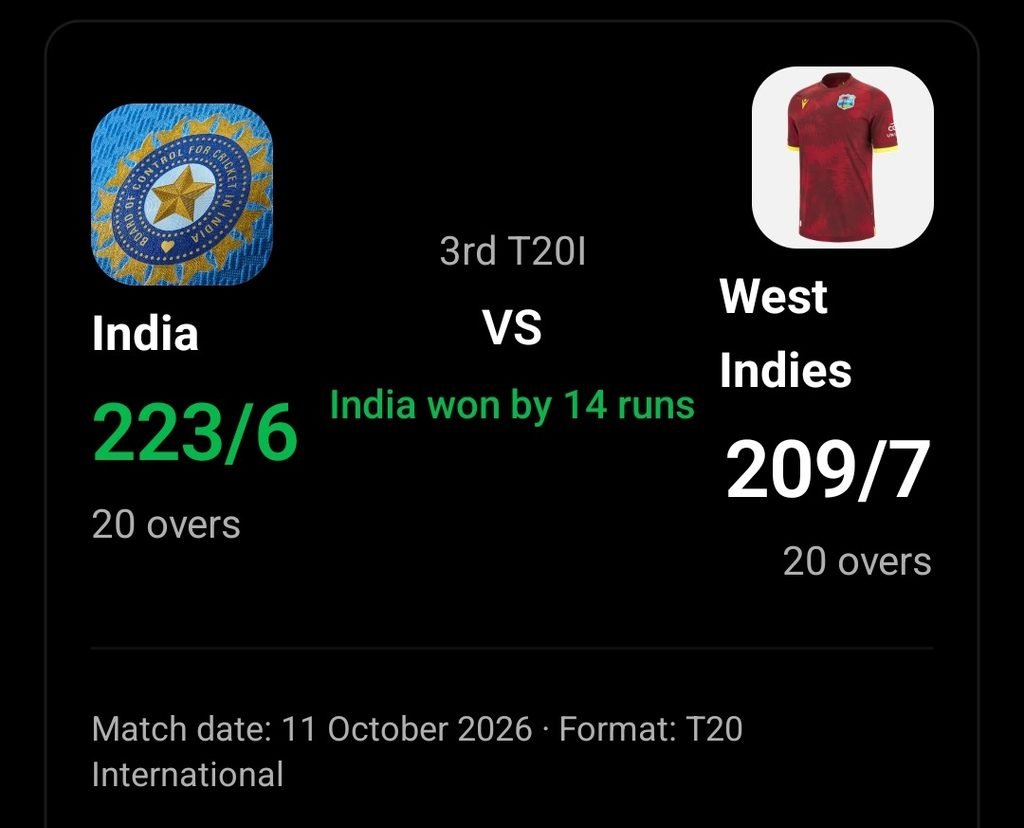
India’s total of 223 runs gave the bowlers a substantial target to defend. The West Indies reached 209 for seven in their allotted 20 overs but finished 14 runs short. The result demonstrated how important it is to combine aggressive batting with disciplined bowling at the end of an innings.
What the result tells us
A total above 220 can create pressure, but it does not guarantee victory in T20 cricket. Teams with powerful middle orders can recover from early setbacks and accelerate during the final overs. India’s successful defence shows the value of taking wickets while maintaining control of the scoring rate.
For a complete player-by-player report, the official scorecard should be consulted for each batter’s runs and balls faced, bowling figures, fall of wickets and extras. Those details help distinguish the players who built the total from those who delivered the decisive overs.
2. Second T20I: West Indies Respond with a Six-Wicket Win
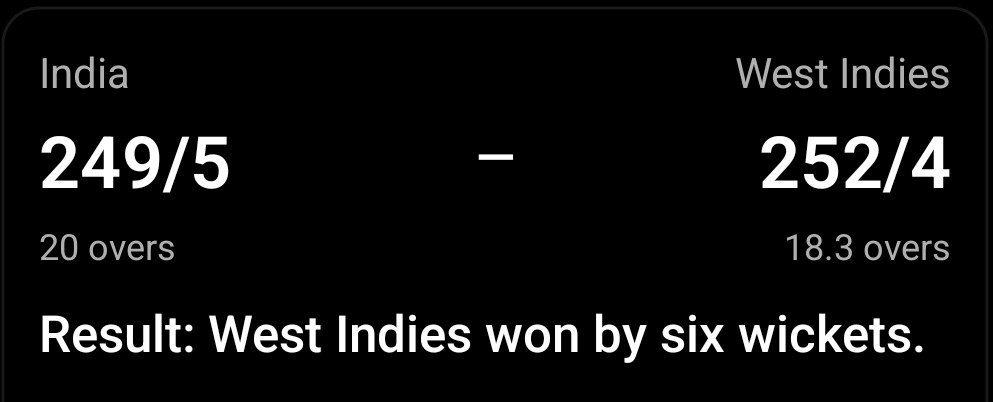
The second T20I, played on October 9, produced a very different outcome. India scored 249/5 in 20 overs, but West Indies chased the target, finishing at 252/4 in 18.3 overs and winning by six wickets. The ICC lists this as a completed international result.
This match provides an important lesson for India’s analysis. Scoring nearly 250 runs is usually an impressive batting achievement, but T20 results also depend on the bowling team’s ability to restrict boundaries, take wickets and prevent partnerships from developing.
When the opposition chases a large total successfully, analysts should examine whether the bowlers conceded too many runs in the powerplay, whether the middle overs produced breakthroughs and whether the final overs were controlled effectively. These are questions to answer from the full scorecard, rather than assumptions about individual players.
The third T20I victory was therefore a useful response to the defeat. India demonstrated that the team could recover, set another high target and defend it successfully.
3. First T20I: India Take the Lead with an Eight-Wicket Victory
India opened the five-match T20I series against the West Indies with a convincing win in Lucknow on October 6, 2026. The West Indies were dismissed for 171 in 19.1 overs, while India reached 172/2 in 14.4 overs to secure an eight-wicket victory.
The standout performance came from captain Shreyas Iyer, who scored an unbeaten 102 from 43 deliveries, including 10 fours and six sixes, according to Reuters’ match report. His innings helped India complete the chase with 32 balls remaining.
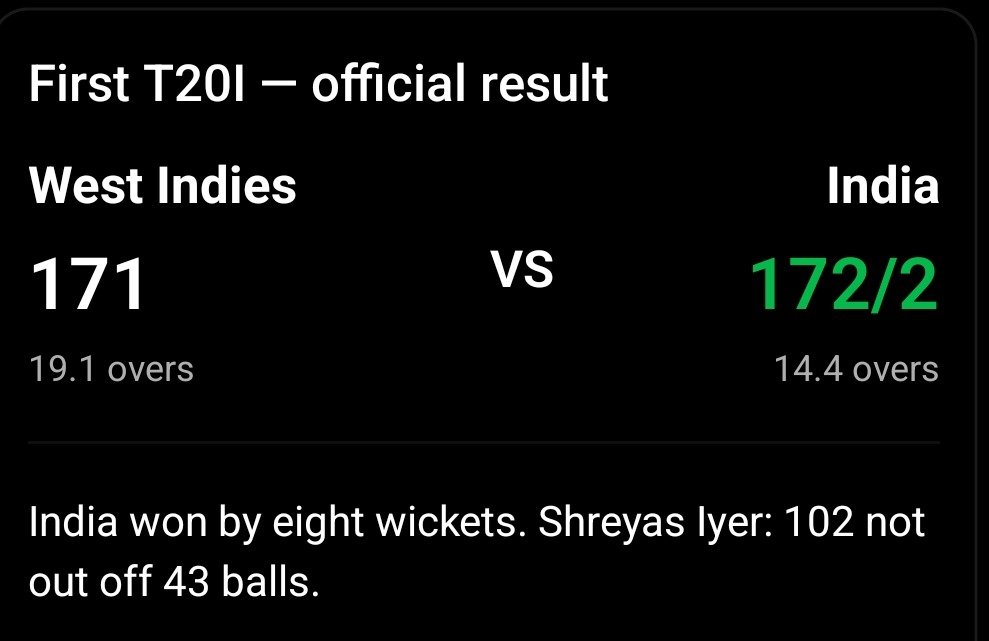
Iyer’s innings is a useful example of how a successful T20 chase is constructed. Batters need to balance risk and scoring speed, especially after losing early wickets. A high-impact innings can change the pressure on the bowling side and make the required run rate easier to manage.
The result also showed the importance of partnerships. India lost two early wickets, but Iyer and Ishan Kishan built an unbeaten 137-run stand, according to Reuters. This partnership helped India finish the chase comfortably.
4. India vs West Indies T20I Series: Results So Far
The three confirmed results provide a snapshot of the series through October 11.
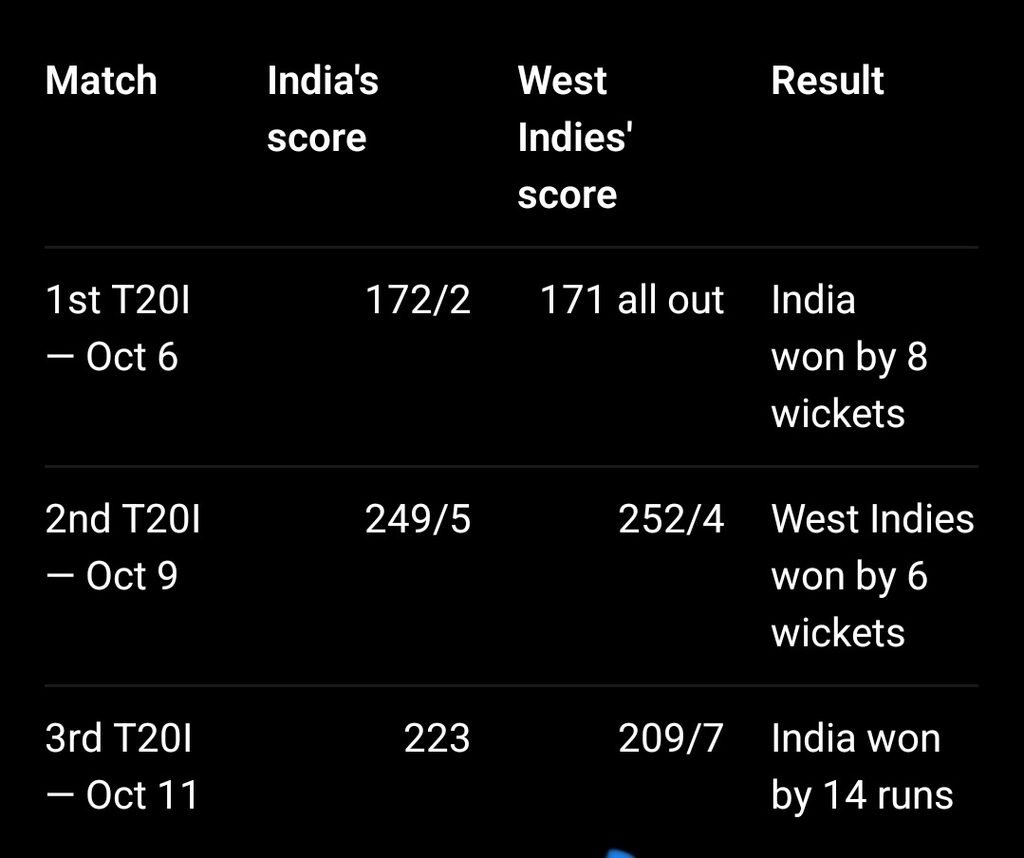
The results show that neither side has been able to dominate every match. India demonstrated its chasing strength in the opener, experienced a difficult result despite scoring 249 in the second match and then successfully defended 223 in the third.
For India, consistency will be an important measure in the remaining matches. A strong team must be able to adapt to different situations instead of relying exclusively on high totals or successful chases.
5. Player Analysis: Batting, Bowling and Team Balance
Shreyas Iyer: A decisive performance in the first T20I
Iyer’s unbeaten century was the defining batting performance in the opening match. Scoring 102 from 43 balls indicates an innings built around both boundary hitting and a high scoring rate. His contribution also helped India recover after losing two early wickets.
A complete analysis should go beyond the final score. The number of balls faced, boundary percentage, strike rotation and performance against different types of bowling help explain how an innings developed. It is also important to assess whether a batter accelerated at the right stage of the chase.
The third T20I victory, in which India defended 223 against a West Indies total of 209/7, highlights the importance of controlling the final overs.
When analysing the bowlers, readers should examine wickets taken, economy rate, dot balls, extras and runs conceded during the powerplay and death overs.
India’s top order: Building a platform
The top order has two major responsibilities in T20 cricket: preserve enough wickets to support a late acceleration and score quickly enough to avoid leaving an unrealistic target for the middle order.
India’s 249-run total in the second T20I demonstrates its ability to produce a large score. However, the result also illustrates that a strong batting performance needs to be supported by effective bowling and fielding
The bowling unit: Defending totals under pressure
The third T20I victory, in which India defended 223 against a West Indies total of 209/7, highlights the importance of controlling the final overs.
When analysing the bowlers, readers should examine wickets taken, economy rate, dot balls, extras and runs conceded during the powerplay and death overs.
These statistics provide a more balanced picture than judging a bowler solely by the number of wickets taken.
Fielding and partnerships
Fielding can change the direction of a T20 match through run-outs, catches and the prevention of boundaries. Likewise, partnerships can rebuild an innings after early wickets or maintain momentum when the required run rate increases.
A proper match report should identify decisive fielding moments only when they are documented in the scorecard or official match coverage. The same standard should apply to claims about injuries, player availability and changes to the playing XI.
6. India Women’s Cricket Team: Leadership Developments
This is an important story because leadership changes can influence team selection, preparation and the responsibilities assigned to senior players.
However, the appointment should be discussed in the context of the relevant format and official squad announcement rather than assuming that every role or selection decision has changed.
India’s women’s team has produced major achievements in recent years, and its development remains an important part of the country’s cricket story. Coverage should include women’s international fixtures, domestic competitions, emerging players and performances by established stars, alongside men’s cricket news.
7. What Should Fans Watch in India’s Next Matches?
As the T20I series continues, several factors will be worth monitoring.
- Batting consistency: Can India’s batters build strong partnerships while maintaining a competitive scoring rate?
- Bowling discipline: Can the bowlers control boundaries and take wickets at crucial moments?
- Death-over performance: Can India defend totals against aggressive hitters in the final overs?
- Team selection: Will the selectors retain the winning combination or make changes based on conditions and player availability?
- Pressure management: Can the team respond effectively after losing early wickets or conceding a strong start?
These are analytical questions, not predictions of future results. The confirmed playing XI, match conditions and official scorecard should be used to assess each game after it has been completed.
8. Conclusion: India’s Cricket Campaign Remains Competitive
India’s recent T20I results against the West Indies have provided plenty for fans to discuss. India opened the series with an eight-wicket win, suffered a six-wicket defeat despite posting 249/5 and then recovered with a 14-run victory in the third match. The results underline the importance of adapting to different match situations and maintaining balance between batting and bowling.
Shreyas Iyer’s unbeaten century was a standout performance in the opening match, while the third game’s successful defence showed India’s ability to protect a large total. The remaining matches will offer further opportunities to assess the team’s consistency, tactical decisions and individual contributions.
For India Handle, the best approach is to publish verified scores first, explain the decisive performances next and separate confirmed facts from analysis. Before publishing updates about subsequent matches, check the official BCCI or ICC match centre for the final result, full scorecard and any post-match announcements.
Leave a Reply