New Opportunities in AI and Cloud Computing with India–Russia Technology Partnerhsip
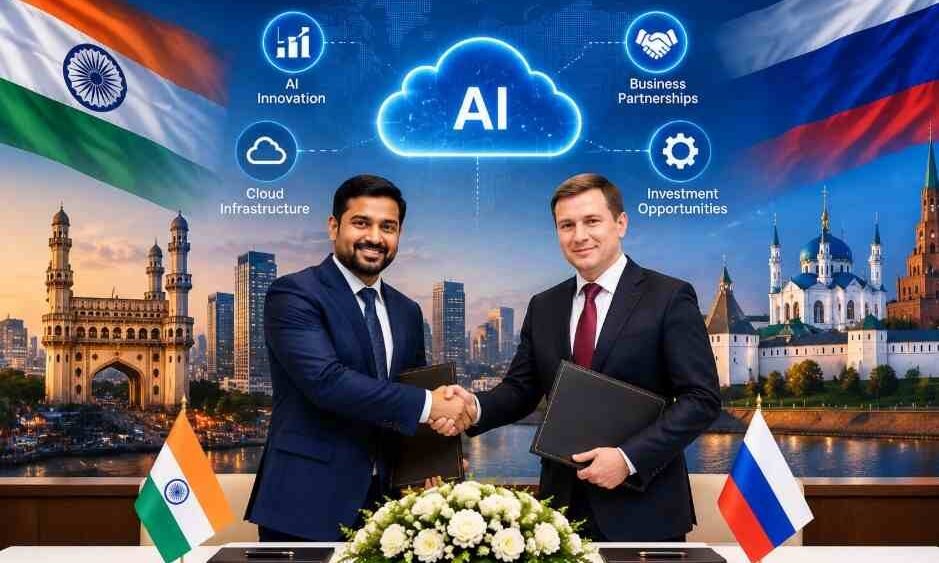
India’s tech sector continues to look for partnerships overseas as companies drive new routes towards artificial intelligence, modernise information programmes and build on exports further afield. Highlighting a growing interest in cross-border technology cooperation, Indian technology company BharathCloud also recently entered into an agreement with the High-Technology Technopark IT-Park in Kazan, Republic of Tatarstan, Russia.
The MoU, which was signed at the TIME: Russia – India Mutual Efficiency Business Forum 2026, lays a foundation for cooperation on artificial intelligence (AI), cloud infrastructure, investment and business development. The agreement can strengthen ties between technology companies in both countries and work as a springboard for future partnerships.
Understanding the New Technology Agreement
The collaboration seeks to provide a platform for bringing Indian and Russian technology stakeholders together through business networking, knowledge sharing and project discovery.
The MoU does not declare a concluded commercial deal, it lays the groundwork for talks on computerised joint efforts. This framework can help both organisations identify their common interests and evaluate opportunities that further their respective business goals.
It illustrates just how dependent technology companies are on international relationships in a business environment where infrastructure, technical expertise and new customers can help drive growth.
Highlights of the India–Russia Partnership
Below is the a table summarizing the key components of the agreement reported.
| Category | Details |
|---|---|
| Indian technology company | BharathCloud |
| Russian partner | High-Technology Technopark IT-Park |
| Russian location | Kazan, Republic of Tatarstan |
| Agreement type | Memorandum of Understanding |
| Main focus | Artificial intelligence and cloud infrastructure |
| Additional interests | There is investment, there is business development and also knowledge transfer |
| Forum | TIME: транспаренции — форумы абсолютно за всё. |
| Status | Framework for exploring future cooperation |
Such an agreement, by itself does not prove funding commitments, completed infrastructure projects and operational joint ventures. These results still need to be announced and arranged for implementation.
Artificial Intelligence Becomes a Priority
Artificial Intelligence is changing the way businesses manage information, automate mundane tasks, and build digital products. From manufacturing to finance to healthcare, logistics and retail — companies are looking for AI applications that drive efficiency and assist their decision-making process [1] [2].
Learning from abroad also allows technology companies to share expertise and review the market opportunities in other nations.
The following could be possible areas of cooperation under the agreement:
- Time to explore AI technologies for Enterprise applications.
- Finding relationships where technical knowledge can be exchanged.
- Linking businesses with potential partners abroad
- Research and development initiatives including collaborations.
- Assessing commercial viability of emerging technologies.
The actual extent of these activities will depend on the priorities set by the organisations involved.
Infrastructure and Growth of Digital Businesses
Cloud computing supplies users with the computation power, storage and networking resources necessary to run modern digital service. Of course, with companies adopting AI and data centric applications over the last several years, demand for appropriate infrastructure just continues to build.
This collaboration opens avenues of cloud-related business liaisons and possible infrastructure projects for India and Russia.
Businesses interested in such cooperative seeking may need to assess litter factors: data administration, cybersecurity and activity compliance operation infrastructure source and pins all comfy. Getting on the front foot with these considerations can also allow more practical projects to be identified and implementation risks reduced.
International partnerships for Indian technology companies might also provide insights into other markets and customer needs.
Leadership and Industry Participation
Rahul Takkapally, the Co-Founder of BharathCloud as invitee by the Government of the Republic of Tatarstan attended business forum He also attended the session “IT Bridge: Technologies Linking Russia and India,” on mutual prospects in artificial intelligence (AI) and cloud technologies.
Ruslan Vlasov, Director of IT-Park in Kazan said that linking the Indian and Russian business ecosystems can be strengthened.
Also lending its voice to the agreement was the Bharath Digital Infrastructure Association which seeks greater synergies between industry and the business ecosystem when it comes to digital infrastructure.
While the involvement of tech and industry representatives may serve to find common interests among partners, a partnership will depend on what projects and commercial relationships follow in practice.
Potential Benefits for Technology Companies
There would be various business-friendly opportunities that could arise following the agreement, especially for businesses keen on international expansion.
Key potential benefits include:
- Business network: Connecting to companies, technology stakeholders in a different market.
- Sharing knowledge: Learning how various nations develop AI and digital infrastructure.
- Market Discovery: Testing customers, testing partners, market commercialisation.
- Technical synergy: Exploring projects which find complementary skills.
- Investment Role Discuss: Potential area for business development in future
These advantages are still potential, but not guaranteed. They would evaluate market interest, legal complications, business feasibility and operational problems before committing resources to set this in motion.
What Happens After the MoU?
The next phase will be to identify some common ground, and see whether practical initiatives can be formed.
Subsequent steps could include meetings in the commercial realm, workshops, technical discussions, country delegations and assessments of possible joint-ventures. More announcements will be needed to determine if these conversations transition into funded projects, service expansions, or infrastructure rollouts.
For stakeholders tracking the partnership, markers of success will be unequivocal project announcements coupled with confirmed investment commitments, timelines for implementation and demonstrable business impact.
Conclusion
The potential for a deeper India–Russia partnership in artificial intelligence and cloud computing was spelt out with the new agreement between BharathCloud and Kazan’s IT-Park. The partnership would help to support technology companies in finding new opportunities in both markets by establishing a framework for business engagement and the exchange of knowledge.
But an MoU is not the measure of commercial success, it is merely a beginning. For its long-term importance, the organisations will have to translate exploratory talks, into feasible projects, sustainable partnerships and results on the ground.
Leave a Reply