Delhi Air Pollution 2026: Causes, Health Impact and Latest Updates
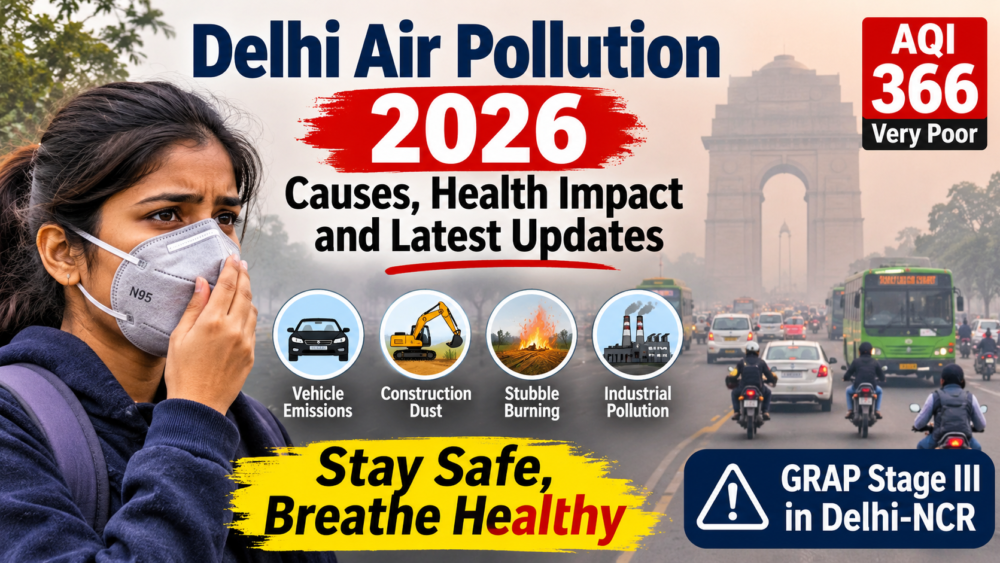
Delhi Air Pollution 2026: Causes, Health Impact and Latest Updates has become an important public concern as the national capital faces another difficult pollution season. Every year, millions of people in Delhi and the surrounding National Capital Region (NCR) experience worsening air quality, particularly during October, November and December. Thick smog, reduced visibility, breathing difficulties and rising health concerns make air pollution one of the biggest environmental challenges facing the city.
In November 2026, the situation has again become serious. Air quality has deteriorated across several parts of Delhi, prompting authorities to introduce stricter pollution-control measures under the Graded Response Action Plan (GRAP). Children, older adults, outdoor workers and people with existing respiratory or heart conditions are among those who need to take extra precautions.
But why does Delhi experience such severe pollution every winter? What are the major sources of toxic air? How does polluted air affect human health, and what steps can residents and authorities take to improve the situation?
This article explores the latest developments, major causes, health consequences and possible solutions to Delhi’s air pollution problem in 2026.
Delhi Air Pollution Latest Updates: November 2026
Delhi’s air quality has remained a major concern during the first week of November 2026. According to air-quality monitoring reports, pollution levels have reached the very poor category, while several monitoring stations have recorded severe conditions.
On November 7, the citywide Air Quality Index (AQI) was reported at approximately 366 in the morning. More than 20 monitoring stations recorded severe pollution levels, demonstrating that the problem is affecting multiple parts of the capital.
Areas including IIT Delhi, Punjabi Bagh, Vivek Vihar and Jahangirpuri have reported particularly high pollution readings.
The Commission for Air Quality Management (CAQM) invoked Stage III of the Graded Response Action Plan across Delhi-NCR on November 6. This decision followed forecasts indicating a possible further deterioration in air quality.
Under these restrictions, authorities are focusing on reducing pollution from construction activities, vehicles, road dust and other major sources.
Residents should remember that AQI readings change throughout the day. The latest local readings should be checked through official monitoring platforms before making decisions about outdoor activities.
What Is Delhi’s AQI and Why Does It Matter?
The Air Quality Index, commonly known as AQI, is a measurement used to communicate the level of air pollution and its possible effects on human health.
It helps people understand whether outdoor air is safe or whether additional precautions are necessary.
India generally uses the following AQI categories:
| AQI range | Air quality |
|---|---|
| 0–50 | Good |
| 51–100 | Satisfactory |
| 101–200 | Moderate |
| 201–300 | Poor |
| 301–400 | Very Poor |
| 401–500 | Severe |
When AQI levels enter the very poor category, prolonged exposure can create significant health concerns. At severe levels, the risk becomes much greater for the general population.
The most concerning pollutants include PM2.5 and PM10.
PM2.5 refers to extremely small particles that can travel deep into the lungs and may enter the bloodstream. PM10 particles are larger but can still irritate the respiratory system.
Other important pollutants include nitrogen dioxide, sulphur dioxide, carbon monoxide and ground-level ozone.
Understanding AQI is important because air pollution is not always visible. Even when the sky looks relatively clear, harmful pollutants may still be present.
Major Causes of Delhi Air Pollution in 2026
Delhi’s air pollution problem does not have one single cause. It is the result of several sources that combine with weather conditions and regional pollution.
1. Vehicle Emissions
Road transportation is one of the major contributors to air pollution in Delhi.
The capital has millions of registered vehicles, including cars, motorcycles, buses, taxis and commercial trucks. Petrol and diesel vehicles release pollutants such as nitrogen oxides and particulate matter.
Traffic congestion makes the situation worse. Vehicles frequently stopping and starting in crowded areas consume fuel and produce additional emissions.
Older vehicles with outdated emission-control systems can create additional pollution.
Improving public transportation, promoting electric mobility and maintaining stricter vehicle-emission standards can help reduce this problem.
2. Construction and Road Dust
Delhi continues to experience rapid infrastructure development, including roads, buildings, flyovers and commercial projects.
Construction activities can release large amounts of dust into the surrounding atmosphere. Uncovered construction materials, poorly managed demolition work and the movement of heavy vehicles can increase particulate pollution.
Road dust is another important concern.
Dust accumulated on roads can become airborne when vehicles pass over it, especially during dry weather.
Regular mechanical road sweeping, water sprinkling where appropriate and proper construction-site management can help control dust emissions.
3. Stubble Burning in Nearby States
Crop-residue burning in agricultural areas of Punjab, Haryana and neighbouring regions is another seasonal contributor to pollution in northern India.
After harvesting paddy crops, some farmers burn leftover straw to prepare their fields for the next crop.
The resulting smoke contains particulate matter and other harmful pollutants.
When wind conditions carry this smoke towards Delhi-NCR, it can add to the existing pollution burden.
However, it is important to understand that stubble burning is not the only reason for Delhi’s pollution. Vehicle emissions, industrial activities, construction dust and other local sources also contribute significantly.
Better crop-residue management, affordable agricultural machinery and support for farmers are essential long-term solutions.
4. Industrial Pollution
Industrial units around Delhi-NCR can release pollutants through manufacturing processes, fuel combustion and poorly controlled emissions.
Industries that do not follow environmental standards can worsen local air quality.
Factories using highly polluting fuels may release particulate matter, sulphur dioxide and nitrogen oxides.
Strict inspections, cleaner fuels, pollution-control equipment and continuous emission monitoring are important for reducing industrial pollution.
5. Diwali Firecrackers
Firecrackers are another seasonal source of air pollution.
During Diwali celebrations, fireworks release smoke, fine particles and gases into the atmosphere. These pollutants can increase pollution levels, particularly when weather conditions prevent the smoke from dispersing quickly.
The impact can become more serious when firecracker emissions combine with existing traffic, industrial and construction pollution.
Public awareness, compliance with applicable restrictions and environmentally responsible celebrations can help reduce this additional pollution.
6. Winter Weather Conditions
Weather plays a major role in determining how quickly pollutants disappear from the atmosphere.
During winter, lower temperatures, weak winds and temperature inversions can prevent polluted air from rising and dispersing.
A temperature inversion occurs when a layer of warmer air traps cooler air near the ground. This can keep pollutants concentrated closer to where people live and work.
Fog and stagnant weather can further reduce visibility and worsen the experience of pollution.
This is one reason why Delhi’s air quality often deteriorates during the winter months.
Health Impact of Delhi Air Pollution
Air pollution is not simply an environmental issue. It is also a serious public-health concern.
Breathing polluted air can affect different parts of the human body, including the lungs, heart and respiratory system.
The health impact depends on pollution levels, exposure duration, age and individual health conditions.
1. Breathing Problems and Lung Irritation
Exposure to polluted air can irritate the respiratory tract.
People may experience coughing, throat irritation, wheezing, chest discomfort and shortness of breath.
Fine particles can travel deep into the lungs, making breathing more difficult.
People with asthma or other respiratory conditions may experience worsening symptoms during periods of high pollution.
2. Increased Risk for Children
Children are particularly vulnerable to air pollution because their lungs and immune systems are still developing.
Regular exposure to polluted air may affect respiratory health and increase the risk of breathing-related problems.
Outdoor sports and physical activities can also increase the amount of polluted air children inhale.
Parents should follow official health advisories and school announcements when pollution levels become very high.
3. Heart and Cardiovascular Problems
Air pollution can also affect cardiovascular health.
Fine particulate matter is associated with inflammation and stress on the body’s circulatory system.
Long-term exposure has been linked to an increased risk of heart disease, stroke and other serious health conditions.
People with existing heart problems should be especially careful during severe pollution episodes.
4. Effects on Older Adults
Older people may be more sensitive to polluted air because of age-related changes in lung function and the presence of other health conditions.
Even relatively short periods of exposure may worsen existing respiratory or cardiovascular symptoms in vulnerable individuals.
Avoiding unnecessary outdoor exposure during severe pollution episodes is a sensible precaution.
5. Eye, Nose and Throat Irritation
Air pollution can cause burning eyes, sneezing, nasal irritation and throat discomfort.
People spending long hours outdoors may experience these symptoms more frequently.
Although some irritation may disappear after leaving polluted surroundings, persistent symptoms should not be ignored.
6. Long-Term Health Consequences
Repeated exposure to polluted air over several years can increase the risk of chronic respiratory and cardiovascular diseases.
It may also contribute to reduced lung function and other long-term health problems.
This makes pollution control important not only during winter but throughout the year.
GRAP Stage III Restrictions in Delhi-NCR
To control worsening pollution, authorities use the Graded Response Action Plan, commonly known as GRAP.
The plan introduces additional restrictions depending on air-quality conditions and forecasts.
In November 2026, CAQM invoked Stage III measures across Delhi-NCR.
Important measures under the applicable restrictions include:
- Restrictions on construction and demolition activities that generate dust.
- Tighter enforcement of vehicle-emission standards.
- Restrictions on certain older vehicles under applicable rules.
- Stronger monitoring of industrial pollution.
- Additional dust-control measures on roads and construction sites.
- Hybrid learning provisions for younger students in the areas covered by the applicable GRAP rules.
- Increased inspections and enforcement against pollution violations.
The objective is to reduce emissions from major pollution sources and prevent further deterioration.
These restrictions may change depending on air quality and official orders. Residents should follow announcements from CAQM and local authorities.
How Delhi Residents Can Protect Themselves
Although individuals cannot solve the entire pollution problem, they can take practical steps to reduce their exposure.
1. Check AQI Before Going Outside
Check the local AQI before planning outdoor activities.
Avoid unnecessary outdoor exercise when pollution levels are very high or severe.
2. Use a Well-Fitted N95 Mask
When outdoor exposure cannot be avoided, a properly fitted N95 respirator can help reduce inhalation of fine particles.
A regular cloth mask may not provide the same level of protection against PM2.5.
3. Keep Indoor Air Cleaner
Keep windows closed during periods of particularly high outdoor pollution when practical.
Use a properly sized air purifier with an effective particle filter if available.
Regularly clean indoor surfaces to reduce accumulated dust.
4. Avoid Outdoor Exercise During Severe Pollution
Running, cycling and intense outdoor workouts increase breathing rates.
During severe pollution episodes, consider indoor exercise in a cleaner environment instead.
5. Protect Children and Older Adults
Children and older adults should avoid unnecessary exposure during high-pollution periods.
Schools, parents and caregivers should follow official advisories regarding outdoor activities and hybrid learning.
6. Seek Medical Advice When Symptoms Persist
Do not ignore persistent coughing, breathing difficulties, chest pain or worsening asthma symptoms.
People experiencing severe breathing difficulty or chest pain should seek urgent medical attention.
What Can the Government Do to Reduce Delhi Pollution?
Individual precautions are useful, but a lasting improvement requires coordinated action from governments, businesses and citizens.
Several long-term measures can make a meaningful difference.
Improve public transportation: Expanding reliable metro, electric bus and other public transport services can reduce dependence on private vehicles.
Promote electric vehicles: Supporting cleaner vehicles and charging infrastructure can help reduce transport-related emissions.
Control construction dust: Strict enforcement of dust-control requirements can reduce pollution from infrastructure projects.
Support farmers: Providing affordable alternatives to crop-residue burning can help reduce seasonal agricultural smoke.
Monitor industries: Regular inspections and transparent emission monitoring can improve industrial compliance.
Increase urban greenery: Protecting parks, trees and green spaces can support healthier urban environments, although planting trees alone cannot solve severe air pollution.
Improve waste management: Preventing open garbage burning and improving waste collection can reduce avoidable pollution.
Strengthen regional cooperation: Delhi-NCR pollution is a regional problem. Governments in Delhi, Haryana, Punjab, Uttar Pradesh and Rajasthan need coordinated policies.
Is Delhi Air Pollution Likely to Improve?
Delhi’s air quality can change significantly depending on wind speed, temperature, rainfall and the amount of pollution released into the atmosphere.
During winter, weak winds and temperature inversions can make it difficult for pollutants to disperse.
Rainfall and stronger winds may temporarily improve air quality, but they do not permanently solve the problem.
The long-term improvement of Delhi’s air quality depends on reducing pollution at its source.
Emergency restrictions can help manage particularly difficult episodes, but lasting progress requires consistent policies throughout the year.
The coming weeks will be important for Delhi-NCR as seasonal weather conditions, local emissions and regional pollution continue to influence air quality.
Conclusion: Delhi Needs Long-Term Solutions to Air Pollution
Delhi air pollution in 2026 is a reminder that clean air is essential for public health, economic activity and a better quality of life.
The worsening air quality in November, along with the activation of GRAP Stage III, shows how serious the seasonal pollution challenge has become.
Vehicle emissions, construction dust, industrial activities, crop-residue burning, firecrackers and unfavourable winter weather all contribute to the problem.
Protecting people from polluted air requires more than temporary restrictions. It requires long-term planning, stronger environmental enforcement, cleaner transportation, better waste management and cooperation between neighbouring states.
Citizens also have an important role to play by avoiding unnecessary pollution, following public advisories and making environmentally responsible choices.
Ultimately, Delhi’s future should not be defined by winter smog and unhealthy air. Clean air must become a year-round priority, supported by practical action from authorities, businesses and the public.
Frequently Asked Questions (FAQs)
1. What is the AQI of Delhi on November 7, 2026?
Delhi’s citywide AQI was reported at approximately 366 on the morning of November 7, placing it in the very poor category. Several monitoring stations recorded severe pollution levels.
2. What are the main causes of Delhi air pollution?
The major sources include vehicle emissions, construction dust, road dust, industrial pollution, crop-residue burning, firecrackers and unfavourable winter weather.
3. What is GRAP Stage III in Delhi?
GRAP Stage III is a set of stricter emergency pollution-control measures implemented when air quality reaches or is forecast to reach severe levels. It includes additional restrictions on construction, vehicles and other pollution sources.
4. How does air pollution affect human health?
Air pollution can cause coughing, breathing difficulties, eye irritation and worsening asthma. Long-term exposure is also associated with increased respiratory and cardiovascular health risks.
5. Which mask is useful during Delhi air pollution?
A properly fitted N95 respirator can help reduce exposure to fine airborne particles when people need to go outside during polluted conditions.
6. Is Delhi air pollution dangerous for children?
Yes. Children are more vulnerable because their lungs are still developing. Parents should follow health advisories and avoid unnecessary outdoor exposure during severe pollution episodes.
7. How can people check Delhi’s latest AQI?
People can check official readings through the Central Pollution Control Board (CPCB), the Delhi government’s air-quality monitoring portal and other authorised monitoring services.
8. Can Delhi air pollution be permanently controlled?
It can be reduced substantially through long-term action, including cleaner transport, industrial emission controls, dust management, better waste disposal and regional cooperation. Consistent implementation is essential.



Leave a Reply